Purple Personality

Famous charts · read blind from a birth record

George Foreman

Champion at 45Jan 10, 1949 · 9:15 pm · Marshall, Texas

Birth record: AA — birth certificate

Written off at 28. Heavyweight champion of the world again at 45.

Now do mine — free

How this page was made

We took the birth data from his publicly documented birth record — rated AA, the highest reliability grade — and ran it through the same engine and the same writer as every paying reader's chart, under a neutral placeholder name. The reading below never knew whose life it was describing. The history did the checking.

What the chart said

You are inside the strongest ten-year stretch of your life so far… where all the earlier building pays off, and its center of gravity is your work and your public standing.

What happened

1977 → 1994He lost to Ali, retired at 28, and spent a decade out of the ring — the chart scores those wilderness years 43 out of 100, his lowest. He came back and won the heavyweight title at 45, the oldest champion ever; the chart lifts to 94.

The arc of his life

Each point is a ten-year chapter of the chart, scored 0–100 before anyone looked at the biography. The same curve every reader gets.

0255075100437594212223242526272age →

The curve is drawn to George's final chapter.

What happened at each point

43Lost to Aliage 2231

World heavyweight champion at 24, he was stunned by Muhammad Ali in the 1974 'Rumble in the Jungle.' He lost the title, and after another defeat in 1977 walked away from boxing entirely.

75The comebackage 3241

After a decade out of the ring as a preacher — broke, heavier, and long written off — he returned to boxing in 1987 at 38, widely mocked as a novelty act.

94Champion at 45age 4251

In 1994, at 45, he knocked out Michael Moorer to regain the heavyweight title — the oldest champion in boxing history — and turned his name into a grill empire that made him far richer than boxing ever had.

Who he is

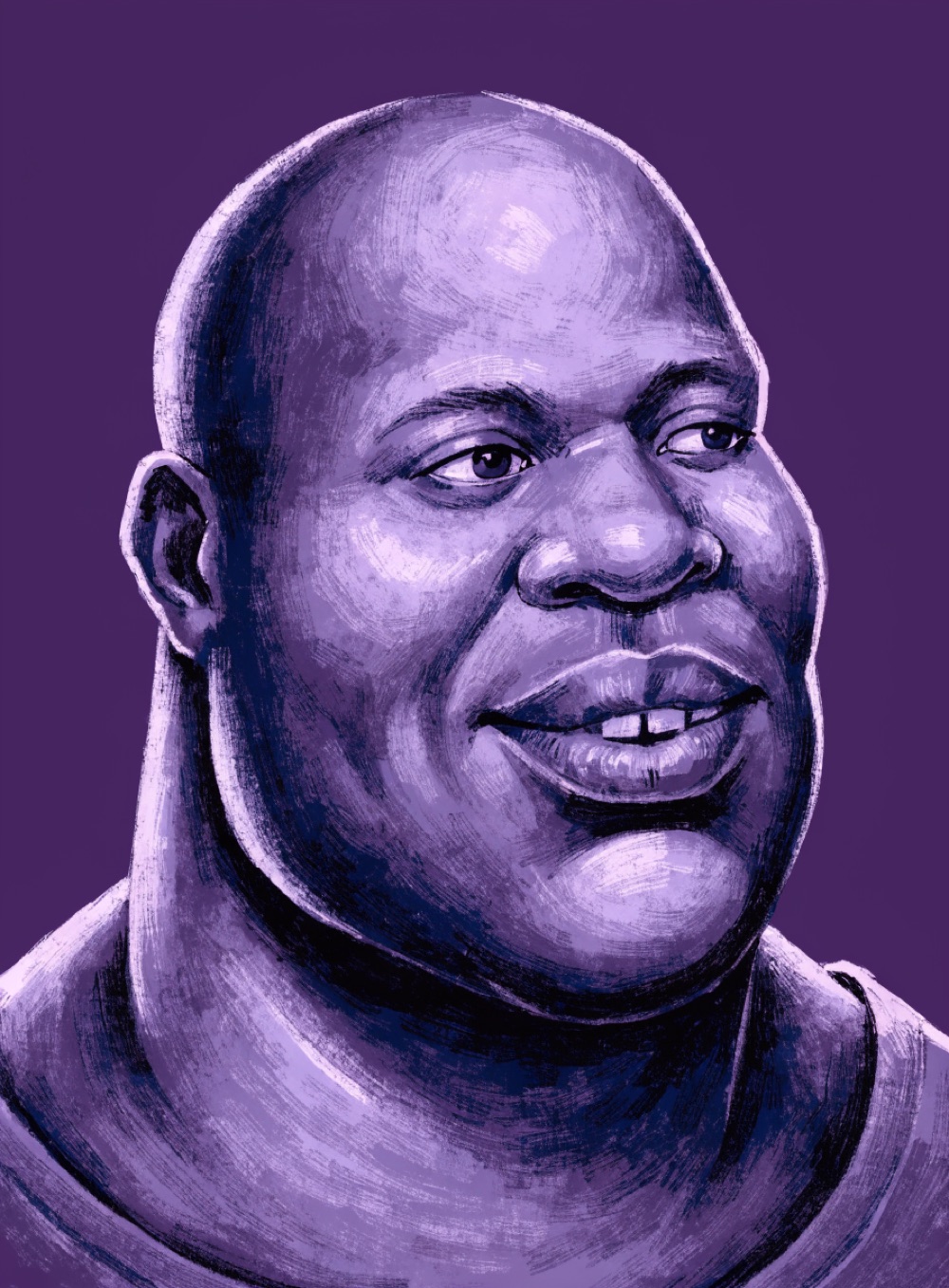
His portrait, word for word, exactly as the reading would hand it to him.

George, you are, at your core, a man of forged steel with a soft-lit interior almost nobody sees. The outside is decisive, competent, self-reliant — someone who walks into a problem and starts solving it before others have finished describing it. The inside is more thoughtful, more feeling, and quieter than your reputation suggests. You've spent a lifetime managing the gap between those two selves, and by now you've made a working peace with it, though not a complete one.

You were born with a fighter's temperament layered over a scholar's mind. You can read a room, read a person, read a situation, and you tend to trust that reading. When you're right — which is often — you move fast. When you're wrong, you tend to double down before you'll admit it, and the cost of that stubbornness has been one of your teachers. The chart says you were meant to lead, not follow; to build, not maintain; to decide, not to consult endlessly. You've probably known this about yourself since you were young.

There is a real hunger in you — for experience, for accomplishment, for the good things of life, for understanding. That hunger is one of your great engines. It has also, at times, run ahead of your judgment. You know what it is to want something so much that you push through warnings you should have heeded, and you know what it is to look back and see the warnings clearly. This is not a flaw to be fixed; it is the texture of a life lived at full volume.

You carry a private grief or a private ache — something to do with home, with family, with a matter that has never fully resolved. It doesn't dominate you, but it's there, in the background, giving your face its particular seriousness in unguarded moments. The people closest to you sense it without necessarily knowing what it is. Your dignity is that you don't spill it. Your growth is learning that letting one or two trusted people see it doesn't diminish you.

Finally, you are far more capable of tenderness than you show. The gruffness is real, but so is the gentleness underneath, and the second half of your life is, in part, about letting the second one breathe more.

All twelve areas of the life

Every reading covers twelve areas of the life. Here are all of his — complete and unedited, exactly as the chart wrote them.

Self & Direction

George, you were built for decisive work. There's a blade in you — a capacity to cut through nonsense, see what actually needs doing, and go do it — paired with an unusually loyal, steady inner backbone. You're not a drifter; you're a finisher. Your life has oriented itself around proving something through action rather than through words, and you tend to measure yourself by what you've built, endured, or set right. The shadow of that gift is that you can be hard on yourself, and hard on people who don't share your standards. When you soften just a little and let others in as partners rather than as inspectors, the same steel becomes leadership.

Money & Resources

Money for you is a long, complicated relationship — not a simple faucet. There's a deep, almost appetite-like relationship with resources: you know how to want things, how to enjoy them, how to make them multiply through effort and appetite for opportunity. But there's also a strain in the machinery — early on, money didn't come easily or cleanly, and you learned to fight for it. When you got serious in your thirties, real wealth-building finally clicked. You're at your best when money is tied to something you're driving with your own hands, not something abstract or passively held. Watch a tendency to overreach right when things are going well; the same hunger that builds can also overspend.

Career & Public Life

Your working life is where the chart shines brightest. There's a natural authority in you — people can feel it in a room — and you were meant to run something, or at least to be the person others turn to when a hard decision has to be made. Public life doesn't scare you the way it scares most; you'd rather be the one held responsible than the one waiting to be told. This is the arena where your gifts most fully show, and where the middle stretch of your life was always going to peak. The caution: your work can eat you if you let it, and titles can become a substitute for peace.

Love & Marriage

In partnership, you carry a curious mix — a deep wish for a fair, dignified companion, and a tendency to hold something back from them. You want a marriage that looks steady from the outside, and often it does. But inside, there's a kind of empty seat next to you at times, a sense that even your closest partner doesn't fully reach the private room where you actually live. You give protection, provision, loyalty; what's harder to give is unguarded need. The marriages that work for you are the ones where your partner doesn't demand you dismantle your armor but slowly earns the key.

Children & Creativity

There's real creative fire in you — sharper and more articulate than you usually let show. You can speak, argue, persuade, teach. With children, though, there's often a distance to bridge; you're the kind of father whose love is real but expressed sideways — through what you provide, what you fix, what you make possible — rather than through easy affection. What you create tends to be practical and enduring rather than showy. Give yourself permission to make things simply because you want to; not everything has to be useful to justify existing.

Home & Property

Home is the tender spot. There's a restlessness woven into your relationship with place — a mind that keeps turning things over about the house, the family, where to live, whether this is the right roof. You've probably moved more than most, or reworked your homes repeatedly, or carried a low background hum of dissatisfaction about family arrangements. There's a knot here that doesn't fully untie in this life; the wise move is to stop trying to solve home the way you solve a business problem and let it simply be lived in, imperfect.

Health & Vitality

Your body has real reserves — more than you give it credit for — but it runs on a nervous, deeply-feeling engine underneath the tough exterior. Emotions you don't voice tend to settle into the body: into sleep, into digestion, into the chest and the eyes. You are the type who works through fatigue rather than resting it out, and who can suddenly hit a wall. Long-term, your vitality is best served by rhythm — regular sleep, regular movement, regular food — rather than by heroic recovery efforts after you've overdone it.

Travel & Change

Movement has been kind to you, though not always predictable. Opportunities have tended to arrive from outside your immediate circle — from other cities, other networks, from stepping onto unfamiliar ground. You travel well, and are often more relaxed on the road than at home. There is, though, an occasional pattern of things being suddenly taken back or falling through when you're away from your base, so keep your foundations tended even when you're chasing something over the horizon.

Friends & Allies

Your circle is smaller than it looks. You know a lot of people, and people respect you, but the ones you'd actually call at 2 a.m. number very few. There's a sharpness in the atmosphere around your friendships — a low-grade wariness about being used, crossed, or misjudged — and you've probably had a few sharp partings that still sting. Choose slowly, then be fiercely loyal to the few. Avoid people who bring drama and heat; they will cost you more than they give.

Siblings & Peers

Among your equals — brothers, sisters, the people you came up with — there's warmth, and there's also a certain aloneness. You may have felt older than your years around them, or set apart. Some of these relationships flowered later and some drifted. You tend to be the one others lean on rather than the one who leans, which is a role you both accept and, quietly, resent a little.

Parents & Mentors

The father-figure energy in your life has been strong and bright — a real presence, someone whose warmth or authority mattered, for better and sometimes for heavier. There's dignity in the older voices that shaped you, but also a weight, an old shadow, some old grief or unspoken thing carried from that generation. You've internalized both the strength and the shadow. Part of your adult work is separating which of your standards are truly yours and which you inherited without asking.

Inner Life & Peace

Underneath everything you are a more private, more reflective man than the world sees. You have a genuine capacity for stillness, and a small daily discipline of quiet — reading, walking, tinkering, prayer, whatever form it takes — steadies you more than any external achievement. Peace, for you, is not the absence of pressure; it's the presence of something small and reliable inside the pressure. When you skip that private hour, everything else eventually goes off-key.

Your turn

That was George's chart reading his life. Yours does the same — free to start.

Now do mine — free

The life, chapter by chapter

The reading walks his whole life in order — the chapters behind, the years in motion, and the guidance it leaves.

Written as if it were 1996, when George was 47 — so the chapters below speak of his later years in the present tense. He died in 2025.

The chapters you've already lived

1950–1959, ages 2 through 11. These early years were more formative and more intense than a child should have had to shoulder. You landed on your feet, but the ground under you was shifting — home was complicated, family arrangements were not simple, and there was a running current of unspoken worry about the house and the people in it. Yet the chart shows real brightness in you already: a bold, capable little person, watched over by an important older figure (a father or father-like man) whose warmth and weight both marked you. You learned early that you were smart, and that being smart was a way to earn your place. You also learned that peace at home was not something you could count on, and you began the lifelong habit of making your own inner room.

1960–1969, ages 12 through 21. This decade was defined by your relationship with elders — with fathers, teachers, authority. You were being shaped, tested, sometimes pushed hard by the older generation, and you were finding out both what you owed them and what you'd have to break from. Money was tight or fraught in this stretch; there were reversals around resources, and a lesson that appetite alone doesn't secure you. There was probably an early romance or intense creative outlet that mattered more than it seemed at the time. You came out of this chapter with your voice starting to form, but also with a wariness — you'd seen how quickly things could turn.

1970–1979, ages 22 through 31. This was the hardest of your early chapters, and honestly, the hardest until much later. The focus turned inward: your own inner weather, your peace of mind, your foundations. You were building an adult life against genuine friction. There was strain around children or a creative or intimate matter — something that closed off, or didn't come as you'd hoped, or arrived with complications. Your body probably first told you it had limits during these years. You worked, you pushed, you paid dues, and much of what you accomplished in this decade doesn't feel to you now like it was properly rewarded at the time. Its real value was the shaping — it taught you how to endure without collapsing.

1980–1989, ages 32 through 41. This is where the tide turned. The chart shows this as one of the strong chapters of your life, and I suspect you can feel it in memory — the moment things began compounding in your favor rather than draining. Home was the central drama: buying, selling, moving, renovating, or rearranging the family base, and it was not always smooth — there was a knot in the house or the family situation that kept demanding attention. But financially, this was a breakthrough decade. Money began to flow, recognition began to attach itself to your work, and you found the rhythm that has carried you since. You entered this chapter still striving and left it as a man who had arrived at something real.

The chapter he was in

You are inside the strongest ten-year stretch of your life so far. The current chapter, 1990 through 1999, is where all the earlier building pays off, and its center of gravity is your work and your public standing.

From 1990 through 1996, what has already unfolded: your career has climbed to a new floor. Whatever you're doing professionally, you've moved into a level of authority, income, and drive you didn't have before — the sense of being at the wheel rather than a passenger. Your own personality has felt sharper and more effective; you've been decisive, and it's paid. Money has followed — not as a windfall but as the reward of accumulated leverage. There have been friction points too: something around close allies or peers has cost you, a partnership or a friendship has cooled or cracked, and there's been recognition mixed with betrayal in your circle. You may also have carried a health signal or two that you noted and mostly overrode. And underneath, that old knot about home and family has not gone away; it has been the private counterweight to the public success.

From 1996 through 1999, what is still ahead: this chapter has more in the tank. Expect the professional peak to continue — more responsibility, likely more income, more consolidation of what you've built. The next three years are for locking in the gains, not for gambling them. Two cautions the chart wants me to name plainly. First, the situation with peers and close associates will keep asking to be sorted out; someone in your circle either needs to be brought closer or released, and trying to keep them at an ambiguous middle distance will cost you. Second, take the body seriously if it speaks — sleep, blood pressure, chest, eyes. You have the constitution to run hard for another decade, but only if you don't ignore the small alarms now. If you use these years well, you will step into the year 2000 with your house genuinely in order.

The years that came next

2000–2009, ages 52 through 61. The center of gravity shifts to your friends, colleagues, and circle. This chapter is more socially textured — less about you alone driving forward, more about the network you're standing in. Your drive and authority remain strong, and there's a beautiful warming toward your father or an older mentor in this stretch, a real reconciliation or deepening. But watch the circle carefully. There is a friction pattern with associates and peers in these years — a falling out, a lawsuit, a partnership that turns sour, or a friend who disappoints. Choose your company with more care than you did in your forties. Financially and professionally, you'll coast on the platform you built, but you won't build a new one as easily; this is a consolidation decade, not a construction decade.

2010–2019, ages 62 through 71. Movement returns. This chapter is about travel, opportunity from outside, perhaps relocation, perhaps a late second chapter in a new place or a new venture that comes from unexpected ground. There's warmth here — a lightness after the friction of the previous ten years. Your voice, your teaching, your ability to communicate what you know comes forward, and this can be a genuinely fruitful and enjoyable decade, especially in its first half. Something around children or a creative project brings both a joy and a complication in this window — a grandchild, an heir, a legacy question — that will occupy you. Health remains manageable if tended.

2020–2029, ages 72 through 81. The focus turns to the body and to vitality itself. This is not a doom chapter — the chart actually reads as one of the higher-quality later chapters — but it asks you to become the steward of your own health in a way you never quite had to before. Your public authority makes another late-life surge; you may take on an elder-statesman role, a board seat, a mentorship, or become the person others come to for judgment. There will be a passage in this chapter that tests your body and your will together; the chart shows both strain and recognition here. Move through it deliberately, and you'll come out on the other side.

Guidance

George, a few things worth carrying:

Your greatest lifelong strength — the decisive, self-reliant, cut-through-it engine — is also the thing that has cost you most in relationships. In this next stretch of years, practice one small discipline: before you decide, ask one trusted person what they see. You don't have to take their answer. You just have to hear it. This alone will change the quality of your second half.

Sort your circle now, in these next three years, while you still have the leverage of your peak chapter to do it from a position of strength. Don't drift into your fifties with unresolved associates draped around your neck.

Make peace, as much as you can, with the home matter — the family knot that has followed you. You won't untie it completely; the chart is honest about that. But you can stop letting it be the silent tax on everything else.

Listen to your body the first time it speaks, not the third.

And finally: let one person, at least one, see the private room. You've kept it beautifully. But a life fully lived is one where the interior is not only tended but occasionally shared. That, more than any promotion or windfall ahead, is the treasure the second half of your life is trying to hand you.

Your turn

Everything on this page came from one birth certificate. Yours says just as much.

No quiz. Date, time, and place of birth.

Read another chart